

Stone gives several Aswan visits a physical connection, but each site asks you to look differently. At the Unfinished Obelisk, the interest includes work that was never completed. At Philae, the surviving monuments are also evidence of a major relocation. At the Nubia Museum, objects and interpretation connect the region’s histories across periods and places.
You do not need to visit all three in one day. Give each enough attention to understand what you are seeing, and leave the transfers visible in your plan. A practical starting point is to choose the site that most interests you, then decide which second visit would add context rather than simply add another photograph.
Look for process at the quarry
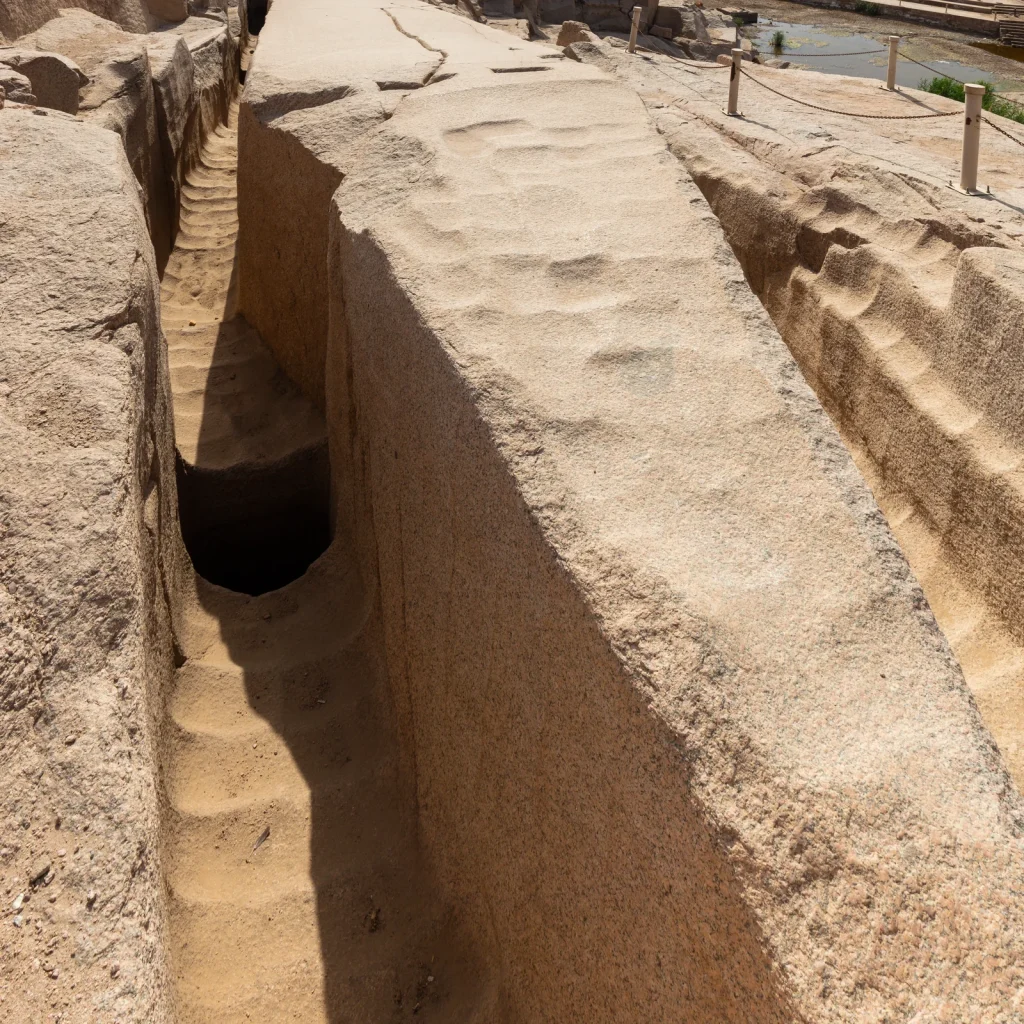
The Unfinished Obelisk remains in an ancient Aswan granite quarry. The Ministry describes the project as probably commissioned under Hatshepsut and abandoned after cracks appeared in the stone. That unfinished state is the reason to look closely: the relationship between the cut channels and the surrounding rock is as interesting as the outline of the proposed monument.
Observe from the permitted route and use the site’s explanations to distinguish original tool traces, later interpretation and the present visitor path. The large photograph on our homepage is a cropped granite detail, not a diagram of the whole obelisk. Hard daylight can emphasize depth and texture, while the actual conditions during your visit may be different.
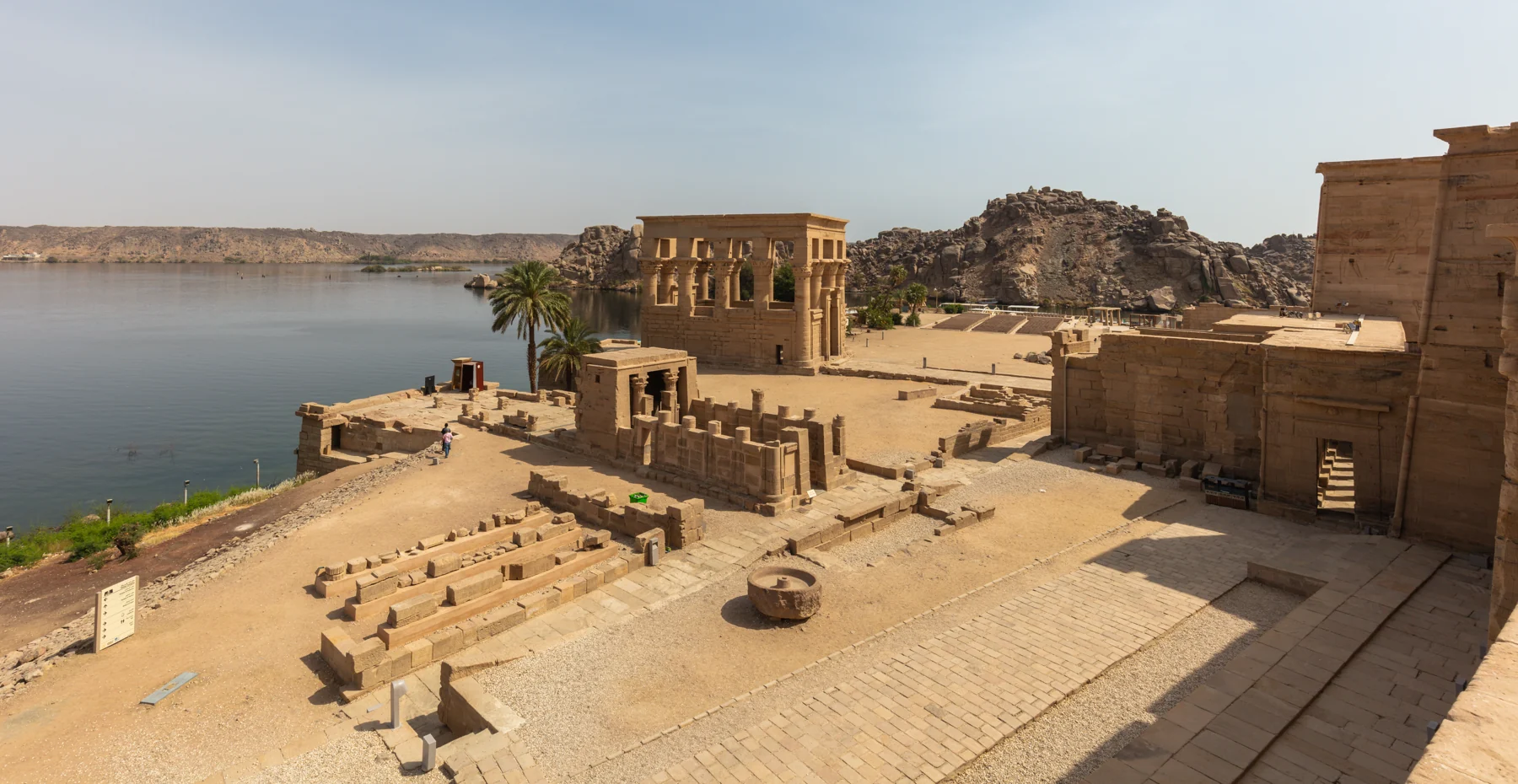
Philae is now on Agilkia
The Ministry’s Philae account identifies a temple dedicated to Isis, the Temple of Hathor and the Kiosk of Trajan among the complex’s monuments. The structures were moved from the original island of Philae to nearby Agilkia as part of the international Nubia rescue campaign. When a current tour says Philae, this relocated setting is the essential geographical distinction.
Choose a guide or interpretation resource that explains both the ancient buildings and the rescue project. Ask where you can see evidence of the transfer and how the current arrangement relates to the former island. Avoid treating every carved figure or inscription as interchangeable decoration; its location, period and label matter.

Use the museum to widen the story
The Nubia Museum provides a way to spend time with regional history beyond one monument. Its official account describes collections and displays concerned with social, cultural and environmental life as well as archaeology. Set aside time for the interpretation, including the relationship between the river, settlements and the salvage campaign.
A museum is a useful published starting point, not a substitute for contemporary Nubian people’s own accounts. Read who produced an explanation and what period it describes. If a local contributor offers a different emphasis, listen to the context and ask where you can learn more. Do not reduce a living place to the objects that happen to survive in a collection.
Compare visits by what is included
For a Philae outing, distinguish road pickup, boat transfer, admission and guiding. These may be bundled or charged separately. Check the meeting point, the amount of time at the site and how the return is arranged. The quarry and museum have their own access arrangements; a package title does not tell you which entrances or fees are covered.
Use current venue information for opening times and admission conditions. We deliberately avoid fixing those details into an evergreen itinerary. If your visit depends on a particular access arrangement, ask about it directly before paying rather than relying on a general accessibility label.
Keep onward excursions in their own space
Abu Simbel and Lake Nasser belong in a wider travel plan south of the city, not as stops within a casual Aswan walk. A provider may sell them with an Aswan departure, but that does not make them nearby city sights. Compare the transfer, start and return arrangements as carefully as the time at the monument.
For a gentler city counterpart, pair your heritage interests with a market and museum day. Give yourself an opportunity to notice Aswan between the major visits.
Sources and further reading
Place and heritage references checked 13 September 2026. Planning suggestions are our editorial guidance; current admission, transport and opening arrangements should be checked with the venue or operator.